
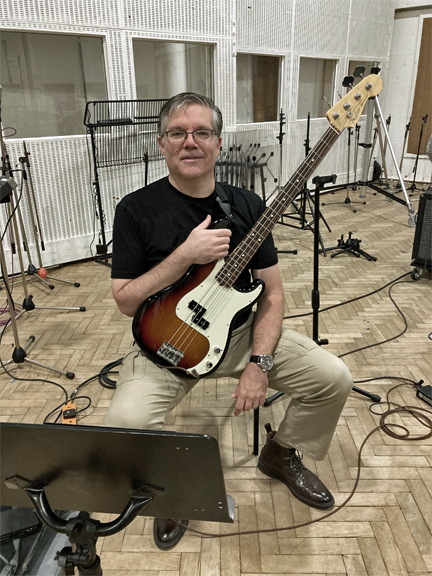
Michael Prince interviews Kevin Brown
Bath-based British singer, songwriter and slide guitarist Kevin Brown has been busy with various projects in recent years. His latest album Mojave Dust has just been released on his own Doodah label to great critical acclaim. Michael Prince caught up with Kevin just before Christmas to find out more about his recent activities.
Michael Prince: Your new album, Mojave Dust, features just you and a guitar, as opposed to your previous band efforts. I know you have often been asked for something like this at your live shows. How did the recording come about and was it in some ways a response to those requests?
Kevin Brown: Mojave Dust is in a way the record I have always wanted to make, but for various reasons the pieces of the jigsaw have only recently come together. When I was with record labels, both independent and major, an album such as this was very far removed from their requirements, plus during those times I was very interested in a band-orientated style of delivery. I had spent the 60s and 70s working solo and when I moved to Bath in 1979 I was ready for a change. Now 20 years and 5 albums later my interests are once again focused on solo guitar and voice. My main inspiration comes from just wanting to be a better slide player. I am fascinated by overcoming its restrictions and learning embellishments that help create smooth, flowing, continuous pieces. Mojave Dust therefore came to be recorded at home and in my own time. I worked for a year just writing and working on a little Dictaphone or small Panasonic recorder from the 70s. Parallel to this, I was developing a keen interest in live sound recording and thanks to some friends I was able to try a variety of methods to help me achieve the sound I was looking for. After much trial and error, I came up with ΒΌ inch analogue tape using a single valve or ribbon mike with the same signal going to right and left channels. Once a song was complete lyrically, I would spend some time working on the delivery and style. With no editing or overdubs, there were some hairy moments when great takes were disturbed by car horns, babies crying or just plain mistakes - if you listen carefully, you can hear an owl at the end of ‘Gypsy Boy’! On the question of recording an album that reflected my live show, it is true that people at my concerts were initially disappointed that the CD they took home was not a reflection of the show they had just seen, i.e. solo voice and guitar. Now when I finish a show, they take home a virtual memory of the occasion and because they are live recordings they can relive the moment.
Michael Prince: You have also done some concerts with the Senegalese master kora player, Moussa Kouyate. How did that collaboration come about?
Kevin Brown: Throughout the Mojave Dust project, I became obsessed with that solitary Mississippi emptiness that just seems to cut through you and leave you semi-paralysed. Its beauty was in the silence that often accompanied a single chord arrangement. When I visited Africa, I again became mesmerised by the local West Coast kora players. Years later, back in Bath I took my daughter Jessica to a children’s festival in my local park. Within minutes of walking through the gates, I heard the sound of a kora and there under a tree was a full blown Senegalese master kora player in my local park! Were it not for Jessica, we might not have met. Luckily his host was an old acquaintance and before long we were sitting in my home exchanging tunes.
Michael Prince: Did it come easily, given that you have your roots in country blues and the blues has its roots in the music of West Africa?
Kevin Brown: When we first met I thought ‘OK here we go, the blues is my driving force, he plays a music from which the blues came - let’s rock’, but I was in for a nasty shock. I could not find any common ground! He would just play one phrase after another, without ever seemingly repeating himself, no verses, no chorus, just endless patterns all inside out and back to front. Playing with Moussa has been the most difficult thing I have ever done, but to our advantage we both have very good timing and our internal clocks beat from the same pulse. Finding the way musically has involved many, many hours just playing together. Often it does not work, but there will be one little grain that inspires us and we desperately grab it and set the clocks ticking. ‘Training’ as he calls it represents sheer struggles of understanding - putting the two of us together often required much inner strength as there were many mountains to climb before the joyous noises we knew we were capable of creating came about. We have toured the UK twice and major plans are being made for next year. If the funding that we are trying for comes through, then a major album release can be expected in the spring of next year, ready for a tour in September.
Michael Prince: I understood you have already recorded the tracks for an album with Moussa.
Kevin Brown: Our album is now recorded and was again done live in my 2-track studio, using a stereo pair and a centrally-placed valve mike. Right now I can’t stop listening to it. I was very concerned that the spirit and joy of our creations was not lost in some ‘collaborations-for-the-sake-of-it’ scenario. Moussa lifted himself and some of his musical explosions have thankfully been captured on tape. We are very lucky to have found each other, we lift spirits and change people’s feelings. They come back time and time again. It is like a medicine that we need. We actually have a very accessible product and are not surprised to find children eagerly awaiting our concerts. It has taken two years of unravelling and re-assembling material in order to have our present sounds. But what you have now is a collection of material of much greater depth, and I have to say I am very, very pleased with the album. We have overcome the struggle and it sounds wonderfully organic and natural.
Michael Prince: You mention your times with different record companies. Do you feel more in control now you are back to recording on your own Doodah label?
Kevin Brown: Since my first album Road Dreams, I have always had control of my recordings. It is what happens afterwards that has been the problem, throwing your heart and soul into writing and recording for two years to then find your label has gone defunct is a serious waste of time and effort. Having Doodah guarantees that will never happen again. But having said that, I am not an ‘admin.’ kind of person and have to wear a rather strange hat when I walk into Doodah headquarters and start checking the accounts.
Michael Prince: You seem to be a bit of dab hand at picking interesting musicians with whom to co-operate on projects. Apart from your work with Moussa, you have also been playing a bit with session guitarist Justin Adams.
Kevin Brown: Justin Adams is a like-minded individual who moved to Bath a couple of years ago, and if you move here and play slide, you are going to get a call from me. He responded, we met and did some recording, his particular interest lying in North African stringed and percussion instruments. He is a fabulous ngoni (African 4-string baby fretless guitar) player. With writing being such a solitary experience, I very much welcome the opportunity to meet and exchange ideas with new friends. I hope we can continue to meet, he is a very cool dude and we have a little magic going there.
Michael Prince: You are also a demonstrator for Ovation Guitars, giving clinics up and down the country at trade fairs, etc. How did you hook up with them?
Kevin Brown: The only link I ever had with Ovation was that I played their guitars, they saved my life, got me out of jail, enabled me to work in the late 70’s and into the 80’s. I could play loud in bars and earn a living. I had the guitar and a PA, so I could work. Twenty years later they got wind of my enthusiasm and invited me to travel around the country demonstrating their product. I do actually have faith in them, as they are strong and they work. They now also sound great acoustically, as you can hear on Mojave Dust. I play a ‘Longneck’ which is actually a baritone guitar, using what should be open D tuning, but it is tuned down a step to C, using quite heavy gauge strings (top string 18 then a 20). The depth inspires me and has helped further my interest in Asiatic flute players.
Michael Prince: You don’t just use Ovations though do you?
Kevin Brown: I have a National Bendaway which never made it to the album, but has been featured on the recordings I made with Moussa. I also have a Kinkade ‘Porchmaster’ which has been set up for regular playing.
Michael Prince: If you get the time amongst all these projects, what are you listening to on record at the moment? What would you say are your current influences?
Kevin Brown: Right now, I am listening to Hollow Bamboo by Ry Cooder and Ronu Majumdar. As far as I am concerned, there is no answer to this record, it is at the absolute limit of inspired expression. There are flute players and there is Ronu. Working with Moussa has in a way introduced me to this other kind of level. When I hear Ronu, he opens all those doors again, it’s that Mississippi thing again, its the same vibe, those vast holes of emptiness that become the backdrop for your imagination. It’s the blues thing, the happiest joyous noise, blues is absolute joy and I am very lucky to have a job that allows me to be involved in it as a musician. I would say that 80% of my listening material for the last 3 years has been the American field recordings made by John and Alan Lomax, I return to them time and time again, because they are helping me to understand who I am and where I am going. If you are interested in slide playing and communicating, they provide the key to everything. Jesse Mae Hemphill, R.L. Burnside and Skip James are amongst others who continually shine their torches when the way gets a little confusing! Also I love Gillian Welch, because she also draws me into her unique world and I get so much pleasure listening to her. Jimmy Vaughan will always be my favourite blues player, I admire a lot of his work, especially his tone and phrasing. Eric Bibb I saw recently, he’s got that hill country thing and is very inspiring. Every aspiring young musician should be made to see Eric, as his performances can teach you so much about how to get the message across, and more importantly what kind of message you want to give.
Paul Bufton of ‘Blues Matters!’ talks to Kevin Brown
Further to the release of his new album, Kevin Brown continues his discussion with Paul Bufton about his early albums.
Blues Matters: Prior to your recording of Mojave Dust, you made 4 albums: - Road Dreams, Rust, Sunny Side Up and Time Marches On. What were your feelings and aspirations when you initially started on your road to a musical career - or should I say your ‘Road Dream’?
Kevin Brown: My road dream was and always will be, sharing the thing that I love to do most of all with people that are close to me and also with those who are new to my work. To create a song from thin air, record it, and witness the pleasure it brings, creates a sense of satisfaction that helps keep you going when things get a little tough. ‘Road Dreams’ became my trademark and it holds values and aspirations that I still retain to this day. I try to make records that you put on and leave on. They were designed that way and that is the way they are meant to be heard. They know no barriers and have allowed me the freedom to explore freely my musical interests without ever being hampered by record company protocol. That is why I think the records sound so interesting I was always given total control.
Blues Matters: Your debut album ‘Road Dreams’ is a 10 track album with a blues/soft rock feel to it. All bar two of the numbers are K.B. with subtle and melodic slide guitar underlying the score more or less throughout the album. The inclusion of Annie Huchrack on some of the numbers really works well and gives another dimension to your compositions, especially on ‘I still love you.’ There were 11 other musicians on Road Dreams. (When was this recorded?)
Kevin Brown: Road Dreams was recorded from 1982 -1984. Every single person on that record was hand picked from my circle of friends at the time, some had known me for years and we all wanted to feel proud of it, to have the record go out with my name on it was the best start anyone could wish for. Annie Hutchrack I discovered singing in a bar shortly after arriving in Bath in 79. She had the purity that I needed to get that transparent type of harmony that could lift a song. I still see her and we often chat about it.
Blues Matters: The opening bottleneck guitar on Road Dreams is haunting and almost eerie, nice, and the acoustic track ‘;put a smile on your face’ demonstrates your love for slide guitar. The album closes with the traditional acoustic instrumental ‘Farther along’ arranged by yourself with both traditional and acoustic bottleneck guitars. This is a superb debut album. What do you feel now looking back at ‘Road Dreams’?
Kevin Brown: The slide guitar that opens the album was done on location in a valley outside Bath which is where I also wrote just a valley away. I had a battery powered amp and recorder plus a telecaster. That is where I spent many days writing ‘Road Dreams’ literally in a field beneath a fine old oak tree. At the end of each day I would listen to the sound sketches and found this piece of wailing noises, Tony Cousins at the Townhouse insisted we use it as he was cutting the record. My feelings now are of complete contentment and pride towards Road Dreams. It was actually recorded twice but I stuck true to the demos, it meant losing my deal with Ensign but I knew those recordings had captured my spirit, how I was ever persuaded to record it again with pro musicians I shall never know, luckily it was only the demos that saw light of day. They were 2′ 16 track recordings plus one 4 track (Diamond Ring) I had a very fine engineer David Lord and Glenn Tommy plus Andy Allen. I produced the album using the same method I have done ever since. That is every thing down together with voice and guitar totally isolated, so we could patch up later if necessary.
Blues Matters: Your next album ‘Rust’ which you recorded over a 4 year period 1987-1990 is pure wall to wall blues. An excellent 2nd album, which you recorded with various backing musicians; 11 tracks all self penned. Again your slide work is superb, but I have to say that on 5 of the tracks your electric lead guitar work is very nice indeed- reminiscent of Freddie King/ early Peter Green.
Kevin Brown: Some songs were driven by that clean guitar style that Peter had slaughtered us all with, plus I had a working band out at the time. Dale Marshall and Jerry Soffe, drum and bass plus Richard Dutton on Hammond. Many songs on Rust were honed on the road and these players just made them sound fabulous. Again I went back to the 2′ 16 track in Bath and used totally local players for the studio cuts, Bible, Southern Streets etc. Adrian Utley who went on to help create Portishead played a major part in that album and helped instil a raw freshness to the sound. ‘Don’t Qui’, plus ‘If I had my way’ and ‘Meltdown’ were done at the Dungeon in Oxford.
Blues Matters: I notice that all bar one of the tracks were recorded in England, except for the slow blues ‘You don’t have to tell me’ with a superb harp solo, which was recorded in Italy.
Kevin Brown: ‘You don’t have to tell me’ was written during the train journeys of an Italian tour I did in ‘87. One night I opened up for this wild trio, Hammond, drums and harmonica. We became friends and had a lot of respect for each other. When I finished the tour I returned to Milan and cut that in the middle of the night. It has a devastating intro and Sals harmonica solo is breathtaking. I learnt a valuable lesson that night. The blues cares not about colour, age or nationality, it is there for the taking but you have to treat it with respect. Do that and it will reward you a thousand times, those Italian musicians changed my outlook on who can and who supposedly cannot ‘play the blues’
Blues Matters: On the superbly rocking track ‘Hey Joe Louis,’ you duet on guitar and vocal with the highly respected Sanfranciscan blues man Joe Louis Walker. How did this collaboration with him come about?
Kevin Brown: ‘Hey Joe Louis’ was the last track I cut for the album. We had just toured together and he did it as a favour. I wrote the song during the tour and he liked it enough to help me out. To have him and his road band on a cut was the icing on the cake for the album.
Blues Matters: Rust closes with the bright instrumental number ‘Sunny side up’ viz the title track from your next album, a purely slide instrumental album. What inspired you to do an instrumental album? The title really embraces the ambience of the album, i.e. a bright and sunny array of 10 numbers 9 penned by your good self and your arrangement of the traditional number ‘Ghazel’.
Kevin Brown: ‘Sunny Side Up’ had been in the pipeline ever since Joe Boyd of Hannibal records heard a Hawaiian Band I had called ‘5 Guys named Mo’. After giving him ‘Road Dreams’ and ‘Rust’ he then suggested we put out a collection of my original slide guitar pieces that were lying around. It reflected my range of musical interests and enabled me to stretch out on some untried territory for slide. Unfortunately the week I delivered the album; Hannibal/Rykodisc was bought by Chris Blackwell who immediately put a stop to such uncommercial nonsense!
Blues Matters: Has any of your instrumentals been used for film scores, T.V. commercials etc?
Kevin Brown: Yes I was fortunate enough to make some music specifically for broadcast which has been used constantly ever since, it features many slide styles and creates great excitement in the house when we hear it on a programme we might be watching!!
Blues Matters: 1999 sees the launch of your next album ‘Time marches on’ on the Taxim label. On this album you work with a multitude of talented musicians, viz. Paul Carrack, Clem Clempson, Mo Foster, Alvin Lee, Rabbit, Pete Thomas, Adrian Utley and others! ‘Time marches on’ is yet another musical illustration of the K.B. package. Original and varied compositions with superb guitar work, soulful vocals and lyrics to the accompaniment of quality musicianship. Of the 11 tracks, 5 you wrote yourself, 2 you co-wrote with Roger Cook, 2 co-wrote with Alvin Lee and 2 co-wrote with Phil Crowther. It must have been fantastic working with these guys?
Kevin Brown: Time Marches On’ was to be my first release on a major label and had a lot of money thrown at it. Being with a major (Chrysalis) meant I had to create a slightly more commercial product but at the same time retain the spontaneity and organic nature of ‘Rust’ and ‘Road Dreams’. I think it works really well, having Paul Carrack and all the other guys around just lifted me, plus I had some old friends from the first albums there too. I was literally exhausted after writing and recording my first ‘pressure’; album. Sadly history repeated itself and as the record was delivered Chrysalis were bought by EMI who did not really understand these more rootsy recordings. The album was shelved. Five long hard years later they released it to me and Taxim put it out in Europe and the UK.
Blues Matters: Again you embrace the blues and its associated genre.
Kevin Brown: It’s all I know, I can’t do anything else, its what I have spent my whole life being true too. The blues and its related genres are my life, the time I spend with my family allows me to look at my work from a distance and live a normal life. Within that every day normality I have to somehow find inspiration for ideas, its all tangled up together really I just have to try and create a living from it all.
Blues Matters: One of the numbers you co-wrote with Alvin Lee ‘Only just a matter of time’ was recorded in Alvin Lee’s house.
Kevin Brown: Alvin was introduced to me by his publisher at Warner’s. We worked for three days in his 16 track Studer equipped studio. We jammed along with a drum box until we got bored. Then in the evenings we would listen through and pick out sections of interest, those sections became the foundations of ‘Dallas’ and ‘Only just a matter of time’.
Blues Matters: The album closes with the moving love song ‘You’re the one’, with soulful slide and vocals. The passion really comes across on this gem of a number.
Kevin Brown: I love playing slide when Paul Carrack is close by singing. ‘You’re the one’ wraps up the album and kind of says ‘there you go, done and dusted!! The passion in the delivery from the whole band reflects the general feel good factor about the album, which is again a record that makes me feel very proud.
Blues Matters: Do you include in your live gigs nowadays any of the numbers from your previous albums?
Kevin Brown: Not yet, I am still getting Mojave Dust of my chest but as more people become aware of my back catalogue I am starting to get requests from my past works.
Blues Matters: Are there any new albums, collaborations etc. in the pipelines Kevin that we can look forward too?
Kevin Brown: My project with the Senegalese Kora player ‘Moussa Kouyate’ is in the can and scheduled for September release. We are touring extensively during that time so keep tuned to the website [www.thekevinbrown.com]. Plus I have been invited to be a guest slide player alongside Jimmy Vaughan and Duke Robbillard on David Maxwel’ s new album. (Piano player, Freddy King, Roomful of blues etc.) Meanwhile I am writing the follow up to Mojave Dust and looking forward to taking that giant leap to stereo having worked in mono for the last three years, very exciting!!
Blues Matters: Thank you once again for supporting Blues Matters. We all wish you well for the future and we look forward to hearing your new projects